
Oopbuy shipping lines, QC photos and the second payment
How to read a line in the estimator, how weight and volume are charged, what the warehouse checks and photographs, how to read those photos, and what to do if something arrives wrong.
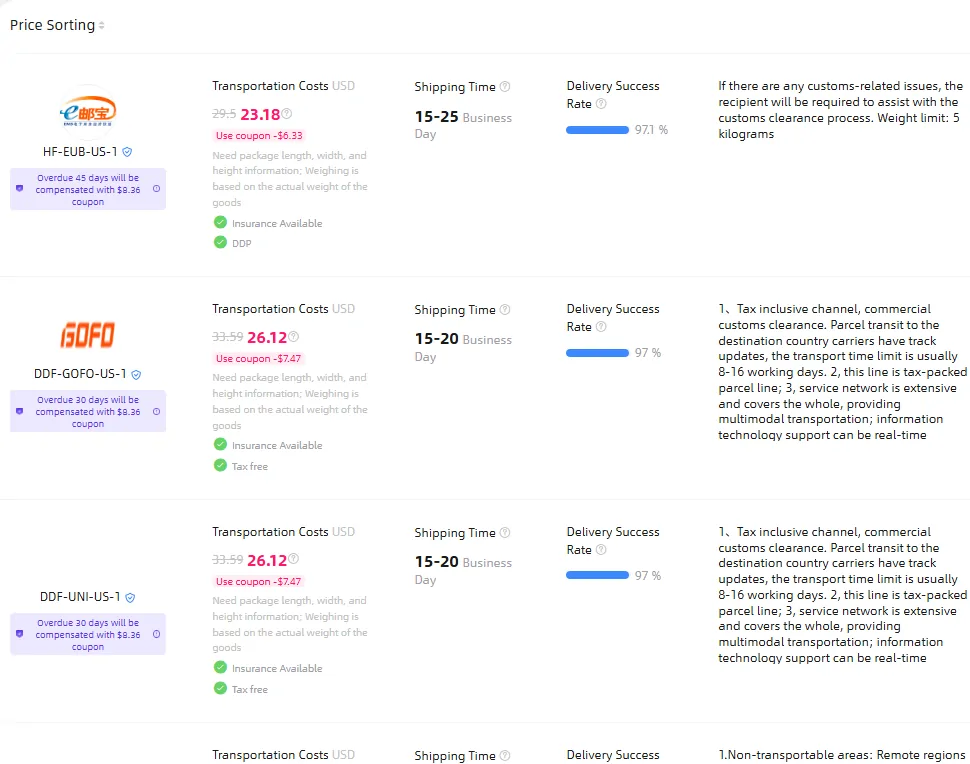
Reading a shipping line in the Oopbuy quote list
Each line in the estimator shows a code, a price in your display currency, a delivery window in business days, a delivery success rate, whether insurance is available, and a tax status. Our 15 October 2026 reading for 1 kg of common goods returned 23 lines to the US, 15 to the UK and 15 to Germany. Those counts only include lines that accept common goods; ask for batteries or liquids and the list changes.
Line codes carry information if you know where to look. The letters after the first dash usually name the final carrier, GOFO, USPS, Royal Mail, DHL or UPS, and the country code follows. Success rates on our readings sat between 97.0 and 97.4 percent, so they rarely decide anything.
What differs is price, time and limits. The low-cost US lines quoted 15 to 20 business days; the fastest express line quoted 7 to 12 at more than two and a half times the price. Every one of those prices is converted at the same printed rate, so the rate never favours one line over another.
Shipping cost, weight and volumetric weight
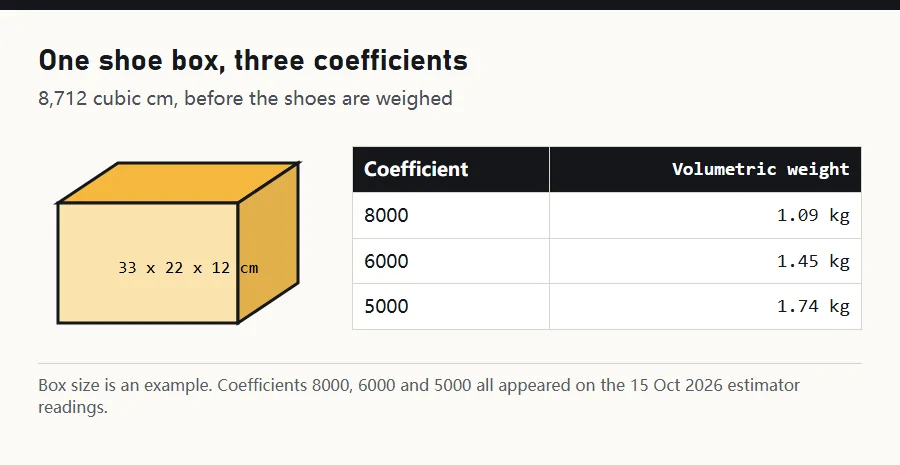
International freight is charged on weight and volume. Lines that use volume compare the parcel's actual weight with its volumetric weight, length times width times height in centimetres divided by the line's coefficient, and charge the larger. The coefficients on our readings were 8000 for most small-packet lines and 6000 or 5000 for some express and duty-paid lines.
A shoe box shows why this matters: 33 by 22 by 12 cm is 8,712 cubic centimetres, about 1.1 kg of volumetric weight at 8000 and 1.7 kg at 5000, before the shoes are counted. Removing boxes is one of the few choices that changes the second payment by a lot.
Lines also cap size and weight. The GOFO line on our reading accepted 50 g to 10 kg and a box no larger than 55 by 45 by 35 cm. The estimator lists each line's limits in its details panel.
Customs, declaration and duty-paid lines
When you submit a parcel you choose how it is declared: self declaration, where the system fills in item types, quantities and values you can edit, or fuzzy declaration, where the warehouse fills it in. The declared value is in US dollars on the lines we read.
Duty-paid lines, marked DDP, settle duty before delivery and on our reading carried a 50 yuan clearance fee inside the quote. Tax-free lines rely on the line's own arrangement. Customs can still inspect any parcel, and Oopbuy's own page says the recipient is responsible for duty unless the line covers it.
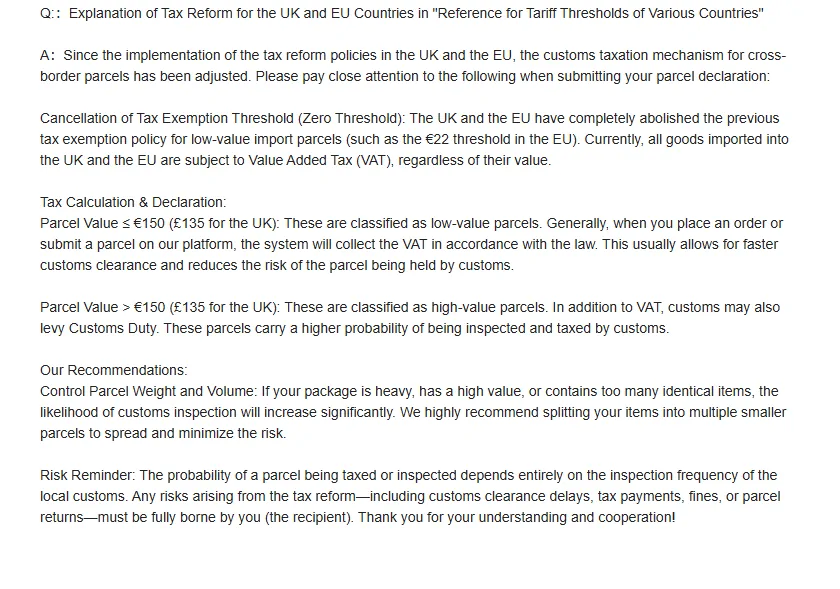
The same page notes that the UK and the EU have removed their old low-value exemptions, so VAT now applies to all imports. It splits parcels at 150 euros (135 pounds for the UK): below that, VAT is usually collected when you submit the parcel; above it, duty may apply as well. Declare honestly. Under-declaring may lower duty but also lowers any compensation, which is usually tied to the declared value.
What a QC check covers at the Oopbuy warehouse
Every inbound package is opened, checked for prohibited items, weighed and stored. Inspectors check quantity, colour, size and the label specifications against your order: appearance, obvious damage, stains, model and version number.
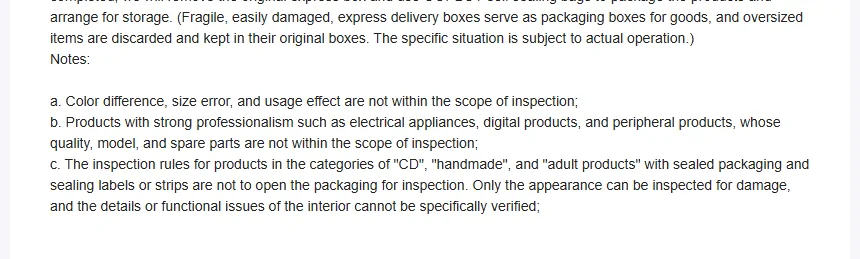
The standard inspection photos are 'generally three', front, back and side or logo, and they are free. Extra detail photos cost 1 yuan each, and a custom fine photography shoot is a paid service. Electronics are checked for appearance only, without power-on tests; sealed media, handmade goods and adult products are not opened.
The inspection excludes colour difference, size error and usage effect. The photos tell you the item arrived and roughly what it looks like; they do not certify fit or quality.
How to check QC photos before you ship
- Compare each photo with the listing photos side by side, not from memory.
- Check the size label in the photo against the size you ordered.
- Look at stitching along seams and hems in the closest photo; ask for a detail photo where it matters.
- Check colour under the warehouse light against the listing, allowing for a slight shift.
- For shoes, check both shoes are the same size and the soles are clean.
- If something is wrong, start the return before the five-day window closes.
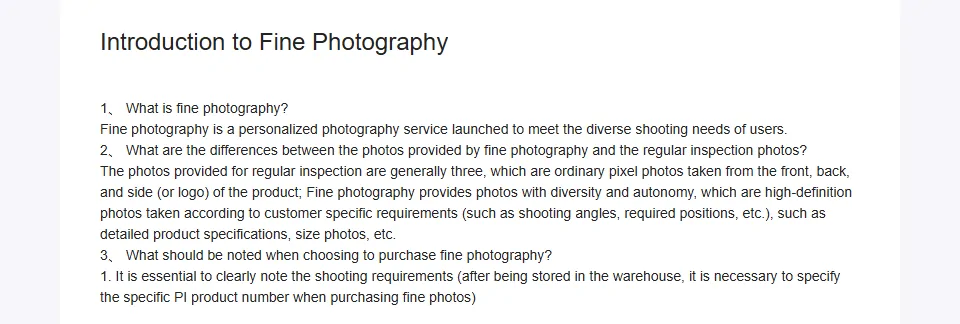
A detail photo at 1 yuan is a small price next to a wrong item shipped across the world. Ask for one when a label, a seam or a measurement would change your decision. And if you are unsure, the glossary explains GL and RL, the shorthand people use when they post photos for second opinions.
Returns, claims and the clocks that run
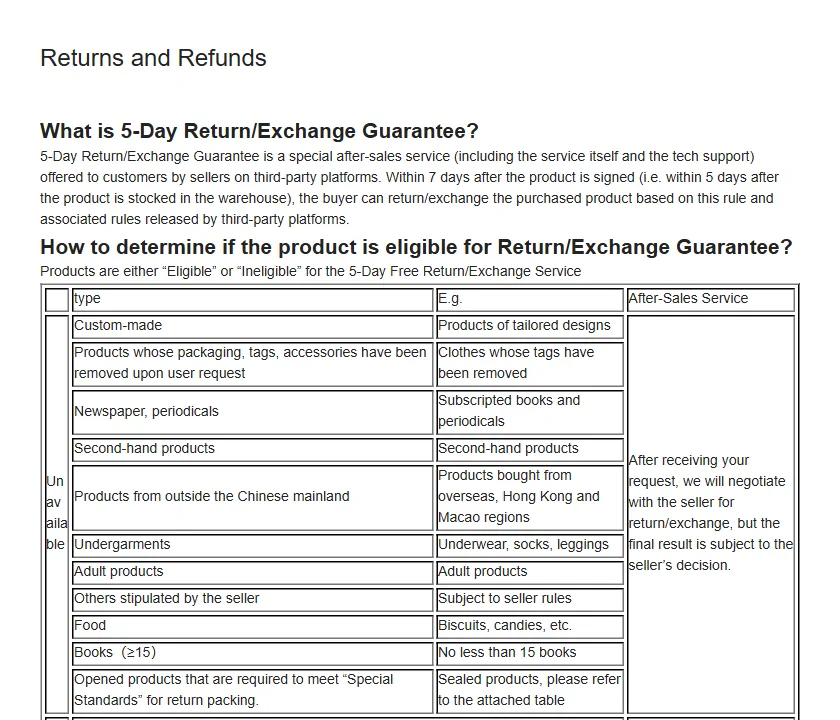
Returns and exchanges run on a five-day window after the item is stocked at the warehouse, which Oopbuy describes as within seven days of the seller's delivery being signed for. Custom items, worn items and several categories are excluded. Return shipping and a small service fee are yours if the reason is yours.
Shipping claims are compensated under each line's own standard. No claim is accepted more than 7 days after signed delivery or 45 days after dispatch. Force majeure, missing proof, theft after delivery, uninsurable categories, prohibited items and customer fault are excluded.
Refunds land in your Oopbuy balance in yuan. The rate used if you then withdraw is not published, as noted on the payment path page.
Read what the photograph can prove
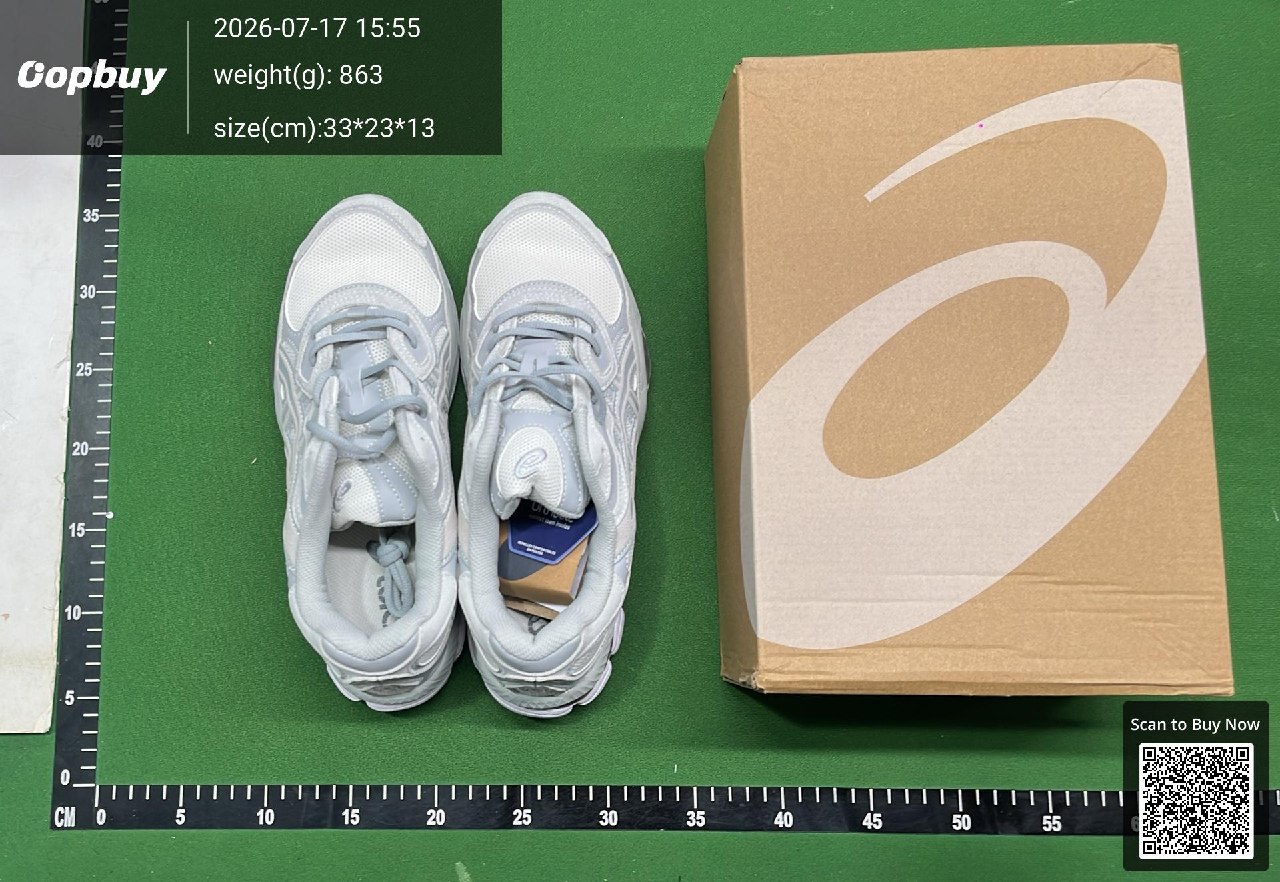
Match the visible item to your order: colour, quantity, model details and size label. Zoom in on seams and obvious marks, then ask for a specific extra photograph if a decision depends on something hidden. A ruler next to a folded garment does not measure its chest width. Ask for the garment laid flat with the tape across the named measurement.
The example shoe image includes the box and a recorded warehouse weight. It does not establish an insole length, comfort or authenticity. Neither the photographed item weight nor its bare dimensions are the final packed-parcel charge.
Do not approve an item just because a community reply says GL. State the defect or uncertainty in the order conversation while seller return eligibility still applies. If a feature cannot be checked by ordinary inspection, ask what service is available before assuming it was tested.
Choose packing with the whole parcel in mind
Soft clothing can often share a parcel; a structured bag, fragile accessory or liquid may need protection or a different line. Before asking for box removal or compression, consider whether it would damage the product, remove evidence needed for a return, or change insurance eligibility. A cheaper outer box is not useful if the goods arrive damaged.
Compare the route’s allowed contents, weight band, destination coverage, chargeable weight rule and service exclusions. A larger parcel can save repeated fixed charges but cross a route limit or cost more by volume. Recheck after packing and retain the item list and bill.